Planning
Moving checklist for Switzerland: from eight weeks before to moving day
Plan your move in Switzerland from eight weeks before to moving day: packing, access and practical tasks, with a saved checklist you can print.

Your checklist
0 / 16 tasks completed
Your ticks are saved only in this browser and are not sent to BO. They stay in place when you change language.
A move is easier to organise when each task has a place in the calendar. You do not need to pack everything eight weeks ahead: start by confirming dates, sorting your belongings and checking access, then leave the final days for essentials.
Use this checklist for a move from Biel or elsewhere in Switzerland. Adapt it to your home and the time available. If you only have two weeks, prioritise dates, access and the quote, then combine the sorting and packing stages. The timings below are planning suggestions, not administrative deadlines.
What to prepare
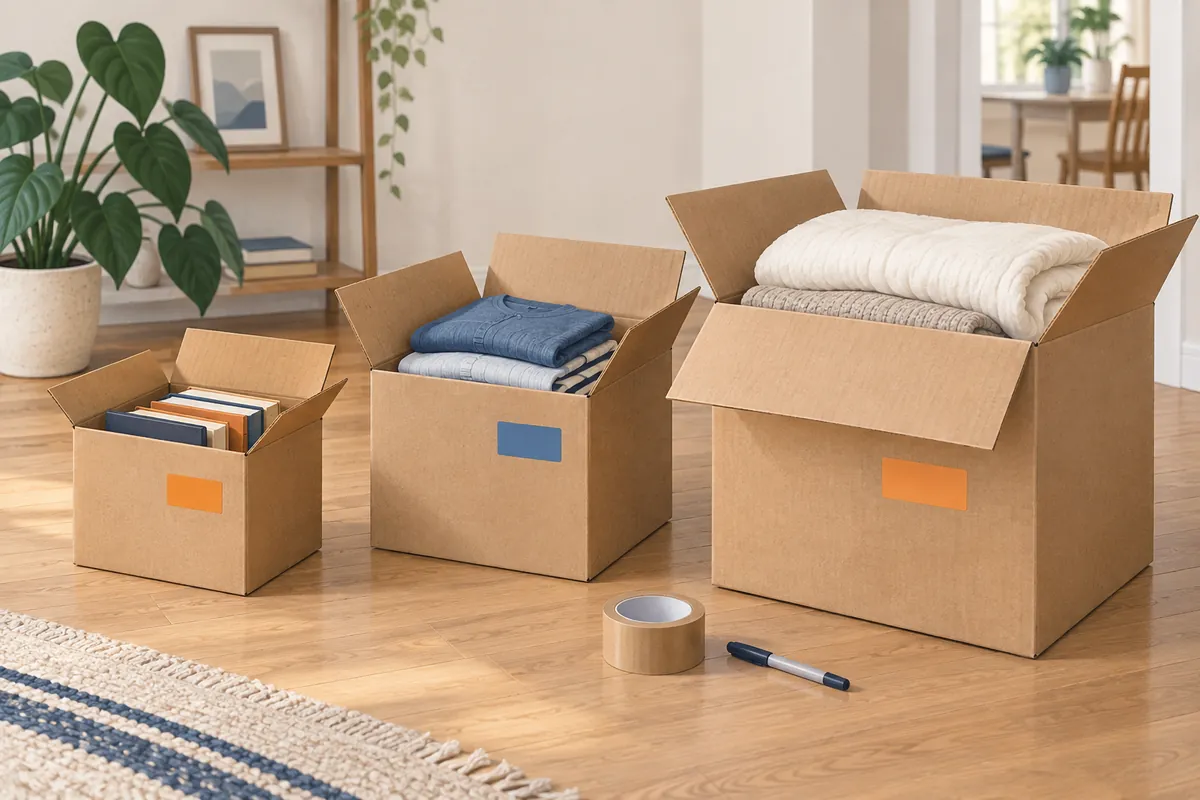
- Sturdy boxes in different sizes, with small boxes for heavy items
- Packing tape, markers and labels
- Clean packing paper, dividers, blankets and corner protectors
- Tape measure, labelled bags for fittings and a folder for documents
- A personal bag and a first-night box
01Eight weeks before: agree dates and make an inventory
Put key collection, departure, arrival and cleaning in one calendar. Check your tenancy terms and agree appointments with the people involved. Avoid arranging the van’s arrival before you can enter the new home.
Walk through every room, then the cellar, attic and balcony. Separate items to move, give away or sell from those to dispose of. A wardrobe you no longer want does not need transporting. Photograph large furniture and measure anything that may be difficult to move.
Request an initial quote with both addresses, your preferred date, the floors and a furniture list. Mention a piano, stone tabletop or display cabinet early: the handling needs to be assessed before moving day.
02Six to four weeks before: check access and address changes
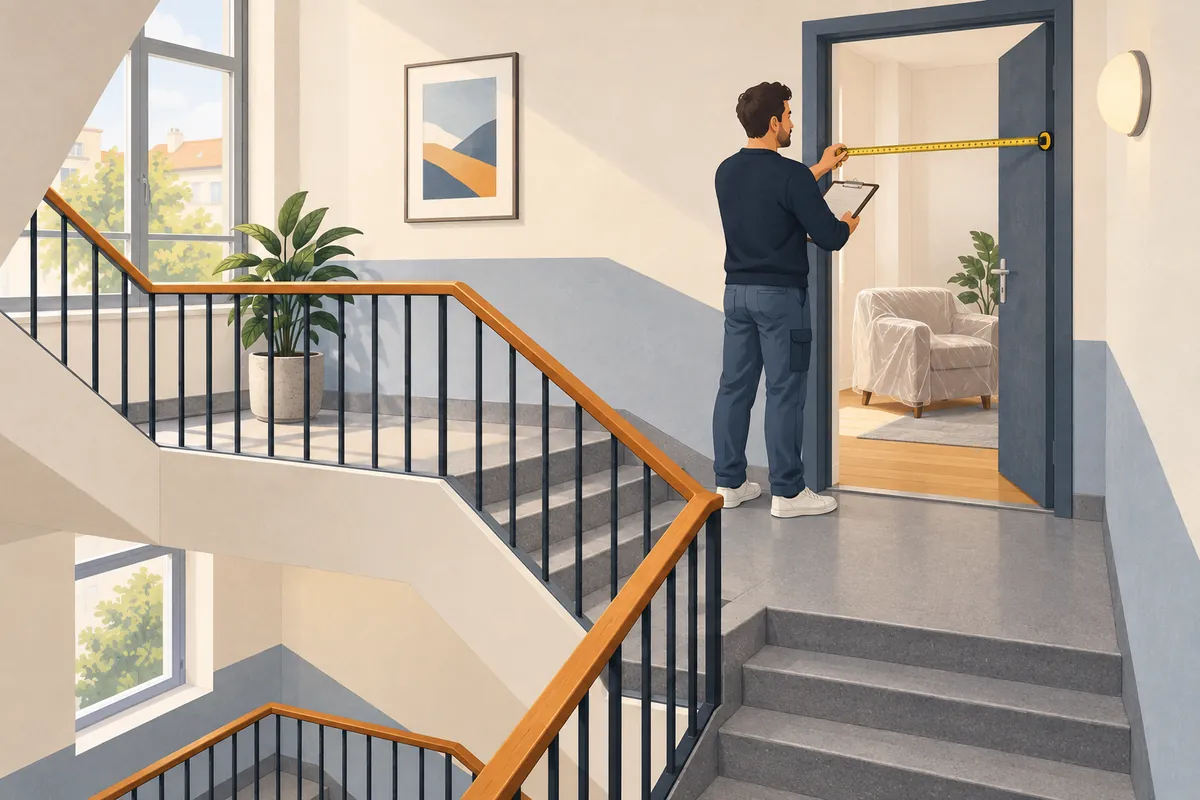
Walk the route between each home and the proposed vehicle position. Note steps, narrow doors, turns and walking distances. Measure the lift doorway and cabin and check its displayed load limit. A lift being available does not mean a sofa will fit.
In Biel, describe the actual route: access through a courtyard or an entrance far from parking changes the plan even for a move of a few streets. Clarify parking with your contact and consult the municipality if arrangements are needed. Do not assume a space will be free on the morning.
Read the official information on registering a move and check the procedure with the municipalities concerned. Make an address-change list for your employer, bank, insurers, subscriptions and suppliers. Check mail-forwarding options with Swiss Post.
03Three to two weeks before: pack what you rarely use
Start with books, out-of-season clothes and decorative objects. Pack one category at a time on a clear surface. Use small boxes for books: a large box filled to the top quickly becomes awkward to lift.
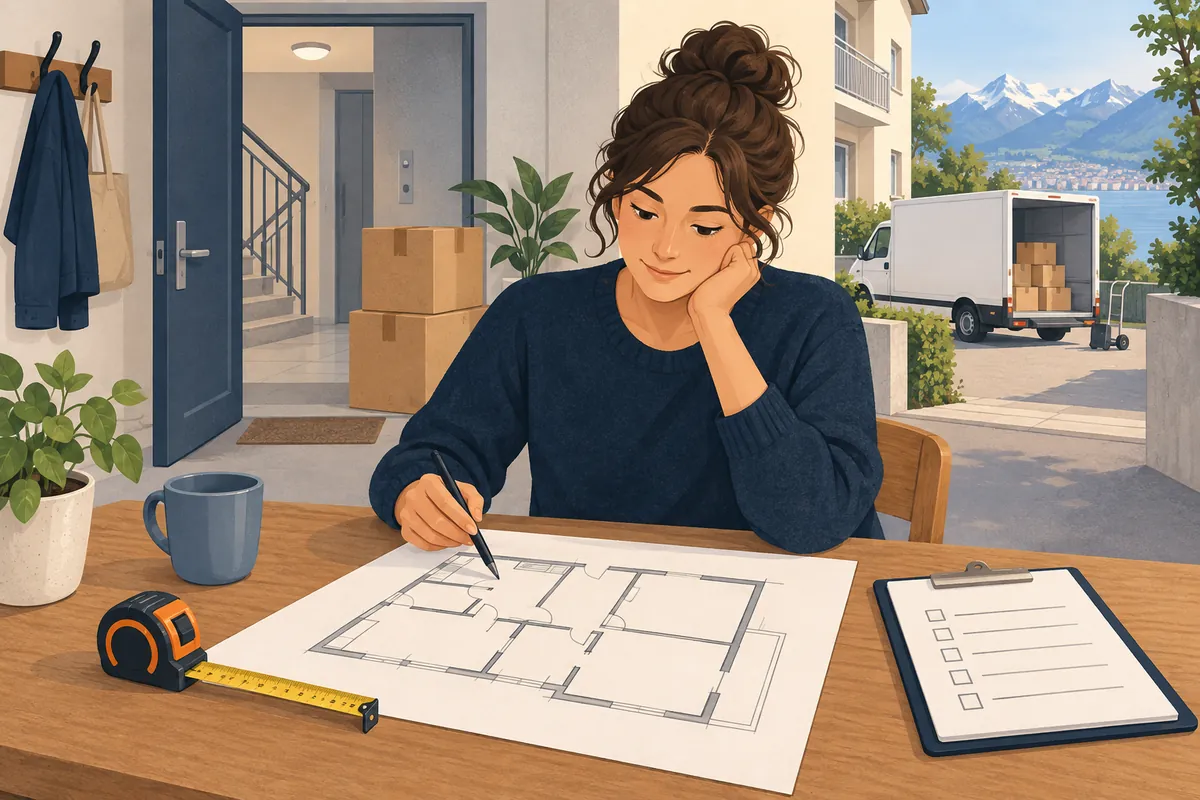
Write the destination room, a brief description and handling instructions on the top and one side. For example: ‘Kitchen — plates — fragile — this way up’. In a bilingual building or with German-speaking helpers, you can add ‘Küche’. Use the same room names on boxes and on the new home’s floor plan.
Decide which furniture needs dismantling after comparing its dimensions with the access route. Photograph joints, identify parts and place screws in labelled bags. Agree what you will take apart yourself and what the movers will handle.
04The final week: confirm arrangements and keep essentials handy
Confirm the time, addresses, reachable contact and agreed work. Report changes such as a broken lift or additional boxes before departure. Arrange care for children and transport for pets away from the handling area.
Prepare appliances according to their manufacturers’ instructions. Allow time for draining or defrosting where needed, dry parts and secure cables without pinching them. For a washing machine, check the transport instructions and transit fixings; do not disconnect an installation you cannot handle safely.
Use up refrigerated and frozen food instead of deciding how to transport it on moving day. Avoid watering plants immediately before departure, empty decorative outer pots and contain any pot that could leak water or spill soil.
Keep identity documents, keys, usual medicines, payment cards, your phone and charger with you. Set aside a box with bedding, towels, soap, toilet paper and a little crockery. Load this box last so it can be opened first.
05The evening before and moving day: clear, direct and check
Close the remaining boxes and clear corridors. Floor protection should lie flat without creating a slippery surface. Keep fire doors and shared passages clear. Separate cleaning supplies from belongings to be loaded.
When the movers arrive, give them a brief tour: delicate furniture, dismantled parts, items staying with you and particular access constraints. One person who knows the plan can direct belongings to the right rooms at the new home.
Before leaving, open every cupboard and check the cellar, balcony and sockets. At the destination, check the visible condition of your belongings with your contact and point out anything you notice. Locate priority boxes and furniture parts before throwing away wrapping.
Details that make your request more precise
Gather these details before opening the form. Concrete information makes it easier to discuss the right scope and avoid assumptions.
- Both addresses, your preferred date and any flexibility.
- Floors, lifts, steps and parking options at both addresses.
- A furniture list, approximate box count and contents of the cellar, attic or balcony.
- Heavy, fragile or bulky items, with measurements and photos if access is uncertain.
- What you will pack or dismantle yourself and the tasks you want BO to handle.